



|
Post Reply 
|
Page <123> |
| Author | |
GM Jejune 
Moderator Group 

GM Joined: 24 Feb 2022 Location: Illyriad Status: Offline Points: 567 |
 Posted: 29 Mar 2025 at 13:36 Posted: 29 Mar 2025 at 13:36 |
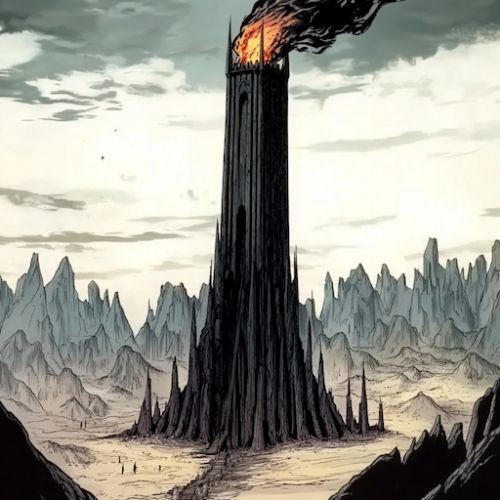 The Spire of Drakenthyr is a foreboding, awe-inspiring tower that rises menacingly out of a bleak landscape of clay hills in the central regions of Farra Isle. The Spire is the central structure associated with the Dragonkin faction, and has cultural and historical roots that connect to the Windseekers, Kadu, and the newly reappearing Dragons of old. Constructed by the Ordo Draconis after their sect broke away from the Windseekers Faction and settled in the remote reaches of Farra Isle, the Spire of Drakenthyr is most notable for being the tallest and thinnest tower in all of Illyria. Its design is often described as being gothic in appearance, and is constructed from a combination of mysterious, deep, dark purple ore and brownish-purple bricks dried from the nearby source of clay. Rising raggedly from its bleak platform, this architectural marvel is accentuated by a sharp steeple at its summit, from which carved areas provide space for Dragonkin priests to conduct dragon-related rites. Ritual fires frequently illuminate the night sky from near the top of the Spire, their flickers visible from great distances, casting eerie shadows upon the landscape. Intricate engravings and ancient draconic symbols bedeck the exterior, hinting at its arcane significance. Little is known of the Spire's internior, though it is rumored that its labrithine corridors lead to a grand, windowless hall in the center of the structure, deeply regarded as the heart of the Order, wherein the highest priests convene amidst relics thought to channel draconic energies. The Spire's location has remained a closely guarded secret until just recently, adding to the mystery and lack of knowledge of the Dragonkin. Even today, the only approach to Drakenthyr -- a narrow path beaten out of the dry clay hills -- is closely guarded by Dragonkin acolytes and they will let no one pass. Even larger companies of soldiers have been met with similarly-sized ranks of Dragonkin troops willing to risk open war to keep the details of Drakenthyr hidden. Only scouts and spies have managed to reach the Spire by traversing the desolate, treacherous hills under cover of night. In spite of the Dragonkin's unwillingness to open Drakenthyr to scholars, pilgrims, and other travellers, Dragonkin priests continue to make their own pilgrimmages to the Windseekers' own tower of Aurelia, the site of where the great dragon Thalumir the Songbearer once visited their people and blessed them with his ethereal gift of "wind-song" as the Windseekers call it. The Spire of Drakenthyr holds truths about the reemergence of Dragons that Illyria must still unlock to truly understand their power and living magic.
|
|

|
|
 |
|
|
GM Jejune
Moderator Group
GM Joined: 24 Feb 2022 Location: Illyriad Status: Offline Points: 567 |
Posted: 16 Apr 2025 at 15:03 |
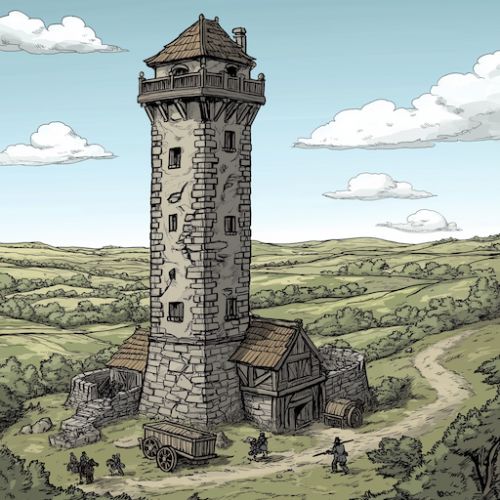 The Tower of Azrabel is strategically located in northern Lucerna, in close proximity to borders with the Middle Kingdom, Ragallon, and Norweld. This grand structure rises majestically amidst verdant hills and shadowed forests, where stone and timber blend together, exemplifying ancient architectural mastery interwoven with the haunting tales of bygone eras. Standing as a grey colossus that looks out over a wide expanse that espies the frontiers with its 3 regional neighbors, the tower's intricate, mannish stonework showcases the toil of expert craftsmanship in its construction, projecting both strength and solemnity. Built by the Fratri Hominis, a faction dedicated to the resurgence and glory of Humankind, the Tower of Azrabel serves as a stronghold of enduring human spirit and resolve. Over the centuries, the tower has been both a guardian and a beacon, safeguarding the inhabitants from interlopers crossing northern Lucerna's complex borders while inspiring the Fratri's citizens towards glory and reclamation across their realm. The Fratri Hominis have utilized the Tower of Azrabel as both a military bastion and a place for gathering human factions driven by shared goals and aspirations. Azrabel represents not just a physical fortress but the ideological stronghold of the Fratri Hominis, embodying their determination to unify and uplift humanity. The tower is closely linked to the Fratri's hub of Dolentis, which has the responsibility of maintaining the tower and supplying the troops stationed there. The Fratri Hominis, with their human-centered focus, are the driving force behind Azrabel's maintenance and its continued significance in Illyriad's geopolitical landscape. Thus, the Tower of Azrabel stands as both a relic of the past and a beacon for the future, deeply embedded in the lore and aspirations of the Fratri Hominis.
|
|
|
|
|
|
|
|
GM Jejune
Moderator Group
GM Joined: 24 Feb 2022 Location: Illyriad Status: Offline Points: 567 |
Posted: 18 Apr 2025 at 13:48 |
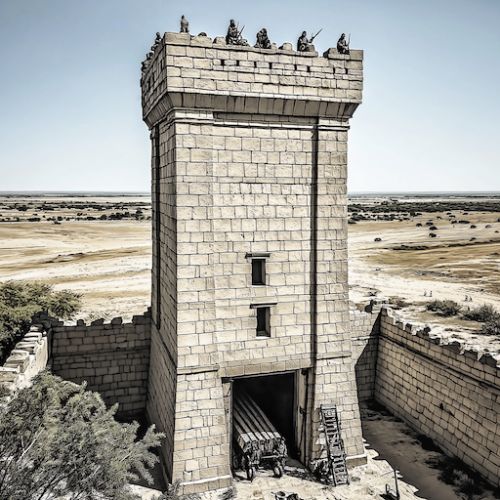 The Tower of Azrakhil is a prominent structure within the territories of the Azure Throne, located in western Azura. Built primarily of sandstone, the tower is adorned with intricate carvings that chronicle the histories and martial accomplishments of the Azure Throne. Its strategic position near the Derucha forest contributes to its role as both a defensive structure and a cultural emblem for the faction. Under the rulership of Empress Cymbeline, Azrakhil transcended its initial purpose as a military fortification, evolving into a symbol of power and cultural significance. Empress Cymbeline, known for her rigorous and strategic leadership style, frequently used Azrakhil as a command center to govern her expansive territories and address threats in the east. The tower provided a strategic vantage point, vital during military campaigns and particularly during hostilities with the gnolls of Skarakar. During the Azure Throne's war with Skarakar, Azrakhil played a critical role as a defensive stronghold for Cymbeline's forces. The height and location of the tower allowed for effective surveillance and coordination of military operations against the gnollish forces. Empress Cymbeline employed the tower as a tactical hub, from which she directed operations that ultimately thwarted the gnoll incursions. In addition to its military significance, Azrakhil also served as a cultural site during Cymbeline's reign. The tranquil environment provided by the Derucha forest made it an ideal location for artistic and intellectual pursuits. Empress Cymbeline herself engaged in writing poetry, and the tower served as both inspiration and retreat. Thus, the tower of Azrakhil became associated not only with martial prowess but also with the arts, reflecting the diverse aspects of Cymbeline's leadership. Overall, the Tower of Azrakhil is an enduring symbol of the Azure Throne, embodying both the martial strength and cultural heritage of its people. Its historical and strategic significance during the reign of Empress Cymbeline highlights its continued relevance as a landmark of power and introspection within the faction's history.
|
|
|
|
|
|
|
|
GM Jejune
Moderator Group
GM Joined: 24 Feb 2022 Location: Illyriad Status: Offline Points: 567 |
Posted: 27 Apr 2025 at 14:40 |
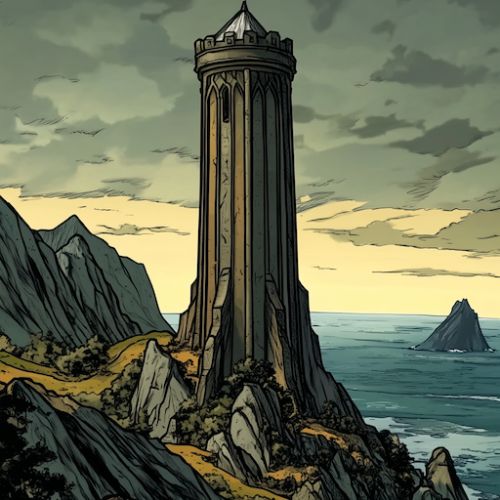 Tenaril's famed and mysterious Tower of Azrubath stands in the far southern reaches of Tallimar on the island of Talandor. The tower is a majestic spire of obsidian, iceheart, and silver, soaring 400 feet into the sky. It aligns exactly with Tenaril's birthplace of Stormstone. The tower's oaken doors are reinforced with ancient steel and whispered to be enchanted by early human enchanters. Its walls are etched with runes of protection and fortitude, visible only to those with the sight of sorcery. Located at -43|-854, Azrubath mirrors Vespera, its counterpart in the Broken Lands, both used by Tenaril to maintain magical contact with followers in Elgea. Together, all 3 places associated with Tenaril -- Azrubath, Stormstone, and Vespera -- align along -43 of their X coordinate. It is believed that Tenaril was able to use both towers as satellites to keep watch over both continents and extend his magical spells even while occupying his tower in Stormstone. Perhaps the most baffling of all is that Azrubath and Vespera are made from the same materials, none of which are native to Tallimarm Stormstone Island, or Pamanyallpa. The obsidian most likely was quarried from Calumnex, which is a true mystery, since the Broken Lands is understood to have been unreachable during the Second Age when both towers were believed to have been built, suggesting that Tenaril discovered some kind of magical isthmus that allowed he and his followers to access the Broken Lands from Stormstone Island at a time when not even the most experienced seaman could have navigated it. Following the movement of Tenaril's adherents away from the tower in the mid-Second Age, it fell into the possession of the Artesian Guard. The Artesian Guard: History and Role The Artesian Guard is known for its vigilant protection of the mystical Artesian wells nearby. They are a dedicated faction committed to ensuring the security of magical resources in the region. The Artesian Guard took control of Azrubath to serve as their watchtower, maintaining a vigilant eye over the enchanted landscape. They are believed to derive their name from a network of Artesian-style wells located near the watchtower of Azrubath, which they are credited with assisting in the construction of and maintaining. These wells have been central to their presence in the region, drawing upon the magical essence of the land. In the Second Age, it is speculated that the Artesian Guard played a crucial role in the grand construction projects initiated by Tenaril. They were potentially the force that Tenaril used to transport obsidian from Calumnex, iceheart from the Long White, and silverstone from the mine in the High Hills—key materials used in the construction of Tenaril's towers. Their expertise in logistics and their ability to navigate the magical currents of the land made them indispensable in these ambitious endeavors, creating a bridge between distant realms and the centers of arcane power. It is believed that Tenaril would have sent them across the magical isthmus into the Broken Lands to quarry and transport the rare earth minerals back to Stormstone and Tallimar, as well as the build site for Vespura in Pamanyallpa The Artesian Guard served as more than just builders; they were believed to be Tenaril's own military force. With their strength and strategic brilliance, they expanded his influence, reinforcing his geopolitical power across Elgea. As a disciplined military entity, the Artesian Guard was loyal and unyielding, entrusted with safeguarding Tenaril's ambitions and the magical territories under his control. Today, the Artesian Guard continues to guard these mystical resources, preserving their heritage and defending against those who might seek to exploit the magical landscape. Their legacy as custodians of arcane wells and protectors of enchanted towers continues to resonate throughout Illyria, embodying a rich history of magic, strength, and vigilance. |
|
|
|
|
|
|
|
GM Jejune
Moderator Group
GM Joined: 24 Feb 2022 Location: Illyriad Status: Offline Points: 567 |
Posted: 03 May 2025 at 13:46 |
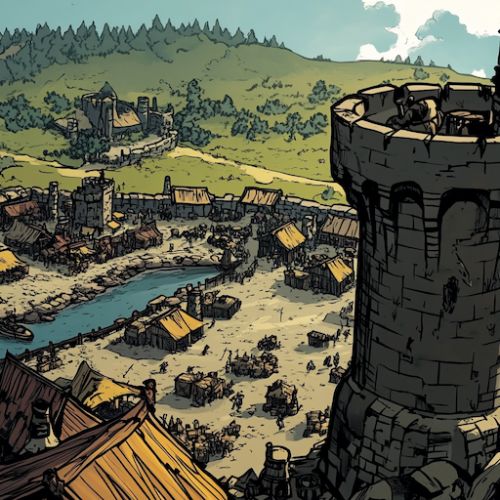 In the heart of the Broken Lands in southern Coanhara, the orcish trading post of Balinhar stands as a testament to the passage of time and shifting tides of power between factions and races. Once a bustling Dwarven trading outpost, Balinhar now echoes with the boisterous clamor of Orc traders from the Kartur-Hhakral clan. Its history is one of transformation, marred by conquest and adaptation. The demise of Balinhar as a Dwarven stronghold came in the wake of relentless Orc invasions that swept across the region during the century that followed the Sundering. The Orcish hordes, aided by legions of other allied greenskins such as Hobgoblins, Goblins, and Kobolds, poured into Dwarven territories with an insatiable hunger for annexing dwarven riches through bloody conquest. At this time, Balinhar was commanded by a dwarven clan in Coanhara known as Clan Stonebeard, a clan closely associated with Clan Dollogh, which had also established and maintained the mighty dwarven halls of nearby Thalgrim -- an ancient trade hub and command support center for Balinhar. While Clan Stonebeard was successful for generations in repelling greenskin invasions, the unstoppable waves of greenskins eventually overran Balinhar and Thalgrim in the same manner that Clan Dollogh suffered at the hands of the orcs, pressing the dwarves further into more remote mountain retreats and scattering them across the Broken Lands to form the trading posts of the Overoad Traders. The marauding greenskin armies fought among each other for dominion over Balinhar until the Kartur-Hhakrall finally asserted themselves as the dominant Faction. In its transformation from a proud Dwarven marketplace to a chaotic Orc trading center, Balinhar has retained remnants of its grandeur while embracing its new custodians. The marketplace, now a cacophony of muddy boulevards and bustling activity, mirrors the cultural juxtaposition at its core. The grand halls inside its administrative buildings, once polished to a gleam by diligent Dwarven craftsmen, are now marred by crude Orcish symbols, creating a striking contrast of traditions. Rough-hewn stalls line the marketplace, where traders of all races elbow their way to negotiate and barter amidst the clangor and commotion. The air hangs thick with the scent of spices from distant lands and the acrid tang of Orcish brews. Stone columns inscribed with old Dwarven runes still stand, silent witnesses to the frenzy below. For traders, conducting business in Balinhar is an adventure in itself. In this melting pot of cultures, where languages and currencies collide, the art of negotiation is elevated to a lively sport. Orc merchants, with their boisterous demeanor and guttural exchanges, inject an unpredictable vitality into the proceedings. Dwarven traders, still present and well-represented among the turmoil, mutter curses under their breath in their native tongue, their bitter eyes watchful for both opportunity and treachery. Each transaction becomes a play of wit and grit, as traders navigate through the shouting, haggling throng, seeking the best deals amidst the chaos that envelops the aging Dwarven halls. Balinhar is positioned in a relatively desolate and unpopulated region of southern Coanhara, but it supports a bustling river trade along the Sawtooth River, which runs through southern Coanhara and begins in the Sawtooth Mountains, home to the Kartur-Hhakrall's Gjuntak Barracks. Just as the ancient dwarves managed Balinhar from their halls of Thalgrim, today, the Kartur-Hhakrall supply and command the trade post from Gjuntak, allowing traders to use the river for expedited transport of goods from one side of the region to the other. At the eastern end of the river, its tributaries merge with the Fairytooth River that ranges up into Silbeaur from the southwest, giving traders an inland passage to the sea. In addition to the Kartur-Hhakrall's nearby Gjuntak Barracks, slipshod orc cities frequently come and go, being hastily set up on nearby lands and summarily burned down when trade deals go badly or competing alliances seek to gain influence over Balinhar's hegemony. While the ethos of commerce persists, Balinhar artfully underscores how heritage and change may coexist, borne on the indomitable spirit of trade and adaptation. Traders who brave its tumultuous avenues say that to barter in Balinhar is to embrace a world in flux, where past glories echo beneath the new order, and fortunes change hands just as swiftly as alliances form and fracture in the shadows of the ancient stones. |
|
|
|
|
|
|
|
GM Jejune
Moderator Group
GM Joined: 24 Feb 2022 Location: Illyriad Status: Offline Points: 567 |
Posted: 05 May 2025 at 13:46 |
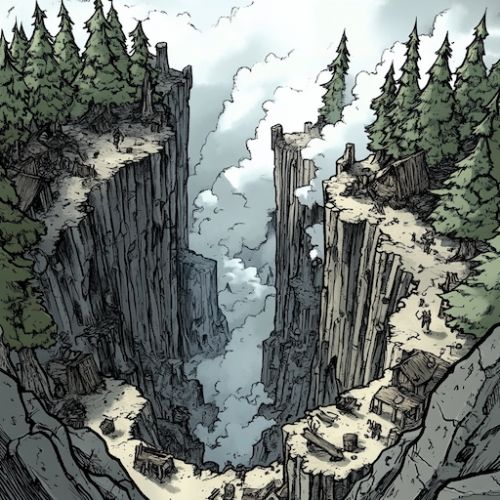 Bolgskarn, the outpost of the Drangu Mundas faction, is a dark abyss located within the foreboding northern foothills of Kal Tirikan's Orelick Mountains. As described by Sanir Di'qualinin, High Archivar of the Council of Illyria, this monstrous chasm lies "like a festering wound" on the landscape, inhabited by throngs of brutish Ogres. These titanic creatures regard Bolgskarn as their birthplace, revering it as a sort of spiritual homeland. To the degree that the Drangu Mundas are capable of reverence, the orges approach and regard Bolgskarn with their unique version of piety. The history of Bolgskarn is intertwined with the legends of how these monstrous beings came to populate the abyss. It is said that the chasm was created during a time of tectonic upheaval, a colossal fissure rent into the land by ancient forces that remain the subject of Illyrian geologists and historians alike. As nature carved this scar into the earth, it also appeared to have breached a mystical barrier between our world and the world of these creatures, opening a portal for them to settle and populate Kal Tirikan. The recorded history of the Drangu Mundas documents Bolgskarn as the ogres' original and longtime haven, using the chasm as their crude shelter in lieu of a civilized village or town. In recent decades, the Drangu Mundas have developed a rudimentary culture and society, establishing the village and trade hub of nearby Drangu Kala, where most of the ogres reside, allowing for basic trade and diplomacy. However, some orges, perhaps drawn to the isolation and the omnipresent aura of raw power that emanates from the chasm's depths, still live within the cave system itself, while others have built ramshackle dwellings around it. The visual character of Bolgskarn is stark and haunting, dominated by steep cliffs and jagged rock formations that rise ominously from its depths. The ground is scattered with the remnants of skeletons of defeated enemies and devoured beasts, while gnarled trees struggle to thrive, and a perpetual fog hangs heavily over the chasm, masking its approach and entrance. Its proximity to the Orelick Mountains to the south provides a natural barrier, forming an insular realm that remains notoriously difficult for outsiders to penetrate. |
|
|
|
|
|
|
|
GM Jejune
Moderator Group
GM Joined: 24 Feb 2022 Location: Illyriad Status: Offline Points: 567 |
Posted: 18 May 2025 at 15:55 |
 Bula Bah is a ramshackle settlement of the Zau Brulk trolls, situated at the fractured edge where the mortal realm meets the unpredictable energies of the Feywild. From the outside of the settlement, it would look like a scrap heap or dumping site to the uninitiated traveler, with its borders sprawling in unplanned dimensions around a bewildering cluster of limestone boulders and weathered monoliths, many of which are daubed with crude ochre pictograms and heavy chains. The trolls have piled up heaps of broken stone and beams around Bula Bah's perimeter as a kind of defensive wall structure, with a crudely fashioned gate at its front, which was torn off of an unnamed settlement -- likely the victims of a Zau Brulk raid. Inside Bula Bah's perimeter, several large greathouses and common areas dominate the settlement's layout. While trolls are traditionally solitary beings that take refuge in caves, under bridges, and in dark recesses, the Zau Brulk faction represents a surprising, new experiment for troll culture, with their kind beginning to work together as loosely-knit communities. The structures inside Bulh Bah are not for individual trolls, but rather give the community places to take shelter in during inclement weather as well as crude areas for arranging basic trade and other public engagements. The core of the settlement is defined by concentric circles of spiked timber palisades, each ringed by uneven trenches and festooned with the remnants of previous Fey incursions: splintered banners, wind-blown feathers, and shimmering trinkets lost by enchanted trespassers. These concentric circles in the center of Bula Bah are believed to represent the Two Pools of Wymsy, twin springs that are enchanted by the Fey whose waters bubble with iridescent colors and whose surfaces shimmer with illusions and reflections. It is said that to gaze too long into the pools is to risk glimpsing alternate selves or to become entangled in the mirthful mischief of the Feywild. The surrounding groves twist in unnatural directions, with trees sprouting erratic branches and bioluminescent fungi glowing in erratic swathes at twilight. Trolls of the Zau Brulk are believed to have constructed their crude wooden circles in a superstitious attempt to wrest the Two Pools of Whiumsey away from the Fey and claim them as the trolls' own "Two Pools of Wyrmwood," believing that they would also be able to wield the pools' magical powers. While the Zau Brulk trade hub of Olog Rraus is but a few leagues from the pools and features crude by high ramparts to observe them from a safe distance, Bula Bah appears to have originally been established at a farther distance for the purposes of constructing the "Wormwood Circles," with the supporting village and defenseive structure being built later on. Given the trolls' deep hatred of the dwarves and near-level animosity with humans and elf, only greenskins dare to enter the settlement and parlay with the Zau Brulk. The Fey, however, appear to come and go as they please, tauting and torturing the dim-witted trolls as they will -- perhaps in a play to focus their attention from assaults on the Two Pools of Whimsey to home defense. |
|
|
|
|
|
|
|
GM Jejune
Moderator Group
GM Joined: 24 Feb 2022 Location: Illyriad Status: Offline Points: 567 |
Posted: 31 May 2025 at 16:11 |
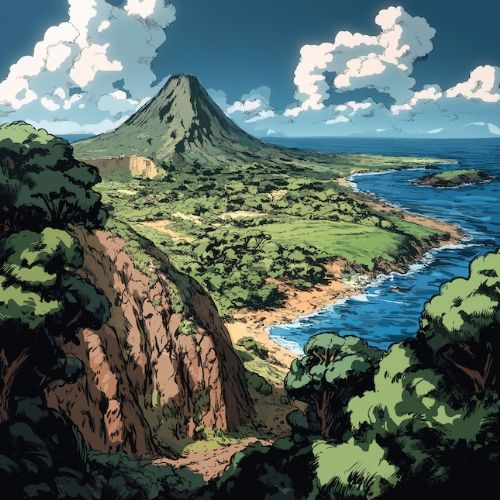 Stormstone Island is a mysterious and highly significant region located in southern Elgea, dominated by the enigmatic Stormstone Tower and renowned for its unique blend of arcane history, spiritual pilgrimage, and bustling commerce. The island, which represents the southernmost point of Elgea, is deeply linked to the legendary wizard Tenaril and continues to be a place that draws seekers, scholars, and traders from across Illyria. 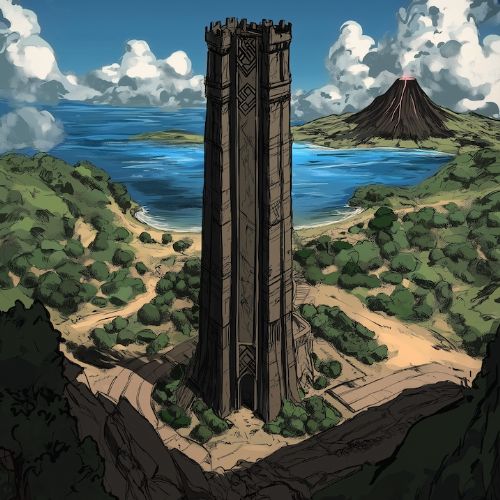 The main feature of the island is a slight hill topped with the imposing Stormstone Tower, an edifice of dark granite, standing five hundred feet tall. The tower is unique for its near-lack of windows, save for two very small openings at the top that face due north and south; its single massive oak door set with rusted iron runes; and the intricate inscriptions rumored to glisten on its upper stones. The settlement pattern around the tower is equally distinctive: for a thousand paces in every direction, there are no buildings. Instead, camps and villages ring the area beyond this boundary, forming a literal circle of encampments around the tower’s base.
|
|
|
|
|
|
|
|
GM Jejune
Moderator Group
GM Joined: 24 Feb 2022 Location: Illyriad Status: Offline Points: 567 |
Posted: 09 Jun 2025 at 14:27 |
 Arran occupies Elgea’s humid south‑central belt and features dense tropical and monsoon jungles, which cloak almost two‑fifths of the land and are broken by flower‑strewn river plains, obsidian ridges, and pockets of freshwater marsh. The Lannigolds' city of Eyepool is located in the southeast corner of the region on the northwestern edge of the Trome delta, while herbalists swarm the forest floor for Arran’s lucrative rare herbs. The region’s plentiful wood, food, and clay make it one of Illyria’s most self‑sustaining provinces. However, good iron is scarce, and faction politics can be lively thanks to resident Dyadan nature‑mystics venturing from their elusive capital city of Dyadin as well as unannounced air patrols of Giant Eagles portaging through their mystical portal at Ailinor, which borders Turalia. Small, seemingly unorganized teams of pirates and road agents, sometimes referred to by locals as "ratbeards," are also known to waylay and rob traders and passersby ranging through the region and seeking to develop trade routes between Eyepool and Dyadin.
|
|
|
|
|
|
|
|
GM Jejune
Moderator Group
GM Joined: 24 Feb 2022 Location: Illyriad Status: Offline Points: 567 |
Posted: 10 Jun 2025 at 13:45 |
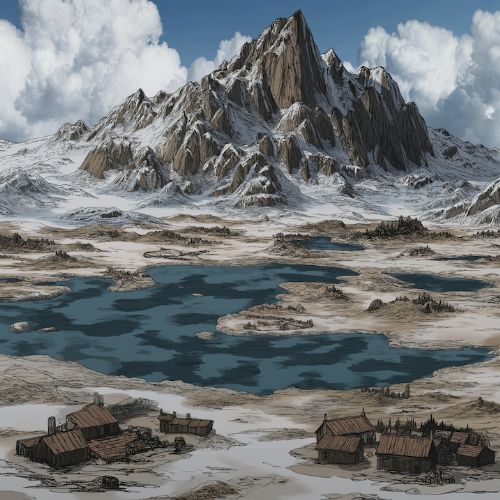 The Wastes is a remote and largely uninhabited region in the world of Illyriad, marked by a combination of arctic and barren terrain types. Much of the region is covered by tundra, snowfields, and glacial highlands, interspersed with areas of rocky ground and desolate plains. It is known for its harsh climate, scarce natural resources, and minimal vegetation, making it unsuitable for large-scale settlement or agriculture. Despite its inhospitable conditions, Players and alliances that have settled in The Wastes have done so by terraforming otherwise inhospitable squares or setting up mining operations to harvest iceheart and other rare minerals.
|
|
|
|
|
|
|
|
Post Reply
|
Page <123> |
 Tweet
Tweet
|
| Forum Jump | Forum Permissions You cannot post new topics in this forum You cannot reply to topics in this forum You cannot delete your posts in this forum You cannot edit your posts in this forum You cannot create polls in this forum You cannot vote in polls in this forum |


 Faction Lore Places
 Topic Options